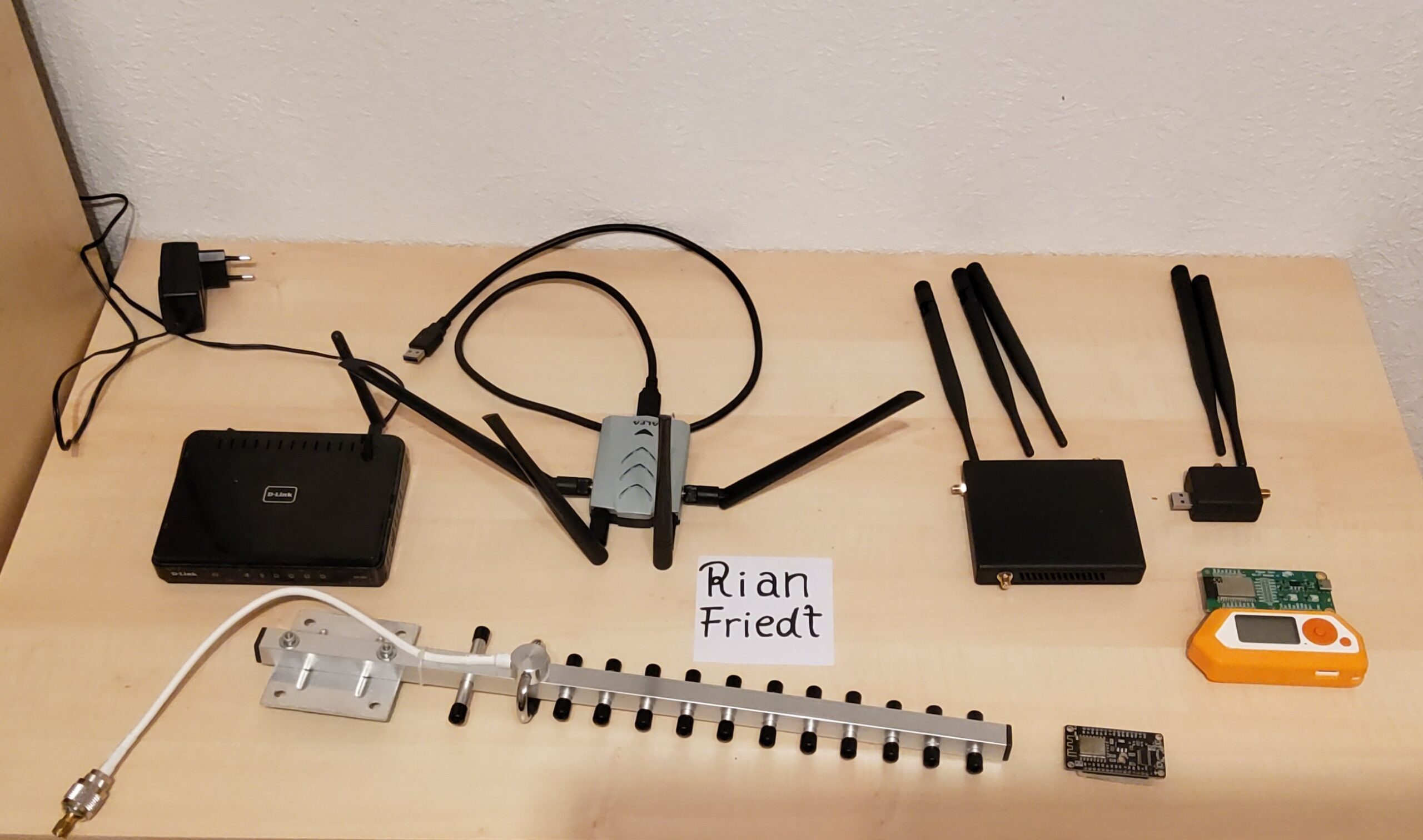
My WiFi security toolkit includes a variety of specialized tools designed for assessing and exploiting wireless network vulnerabilities. Here’s a breakdown of the equipment I use and its capabilities:
Pineapple Mark 7 from Hak5: This powerful WiFi auditing tool allows me to create Evil Portals, perform man-in-the-middle (MitM) attacks, capture credentials, and conduct rogue access point attacks. It is highly effective for identifying weak or misconfigured WiFi networks and demonstrating potential attack vectors.
MK7AC WiFi Adapter: Paired with the Pineapple Mark 7, this adapter enhances performance by supporting dual-band (2.4 GHz and 5 GHz) WiFi signals. It improves the range and speed of network attacks, allowing for more effective testing and data collection.
Alfa AWUS1900 AC: A high-powered WiFi adapter capable of handling multiple simultaneous connections. Its strong signal reception and AC capabilities make it ideal for de-authentication attacks, packet injection, and brute force attacks on WPA/WPA2 networks.
Flipper Zero with WiFi Dev Board: This compact tool allows for wireless testing and signal manipulation. It can scan for networks, perform de-authentication attacks, and monitor WiFi traffic, providing an all-in-one portable solution for quick WiFi security checks.
ESP32 WiFi Chip with Pentesting Firmware: This lightweight chip can run specialized firmware for WiFi pentesting, enabling network scanning, packet injection, and denial-of-service attacks. It’s a versatile tool for quick wireless assessments.
Yagi Antenna (25 dBi): This directional antenna greatly extends the range of my wireless testing capabilities, making it easier to assess the security of networks from a distance. It is especially useful for targeting far-away networks and evaluating the effectiveness of long-range WiFi security.
How I Can Help Companies Secure Exposed WiFi Networks:
With this advanced WiFi testing gear, I can identify and exploit common vulnerabilities in wireless networks, such as:
Open or unprotected networks (open hotspots, guest networks)
Rogue access points and Evil Twin attacks (intercepting credentials and sensitive information)
Once vulnerabilities are identified, I provide actionable recommendations to help organizations strengthen their wireless security posture. This can include:
Upgrading encryption protocols to WPA3 or implementing stronger passwords.
Improving access point configurations by disabling unnecessary features, using strong authentication methods, and enabling network segmentation.
Deploying monitoring tools to detect rogue access points and mitigate man-in-the-middle attacks.
Conducting regular security audits to ensure that WiFi networks are consistently monitored and protected against new threats.