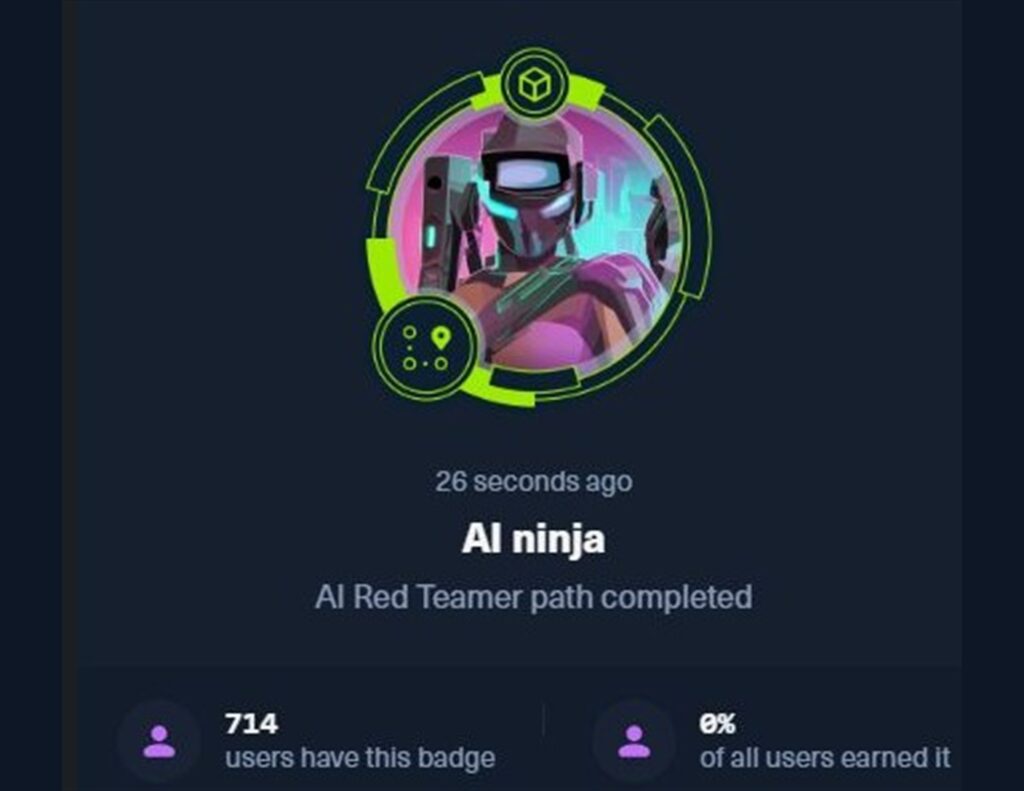
Earned the AI ninja badge for completing the Hack The Box AI Red Teamer path.
Reached Hack The Box Grandmaster rank on the ADonisRian #DE profile. Level 91 at capture.
NFC Security Testing Gear
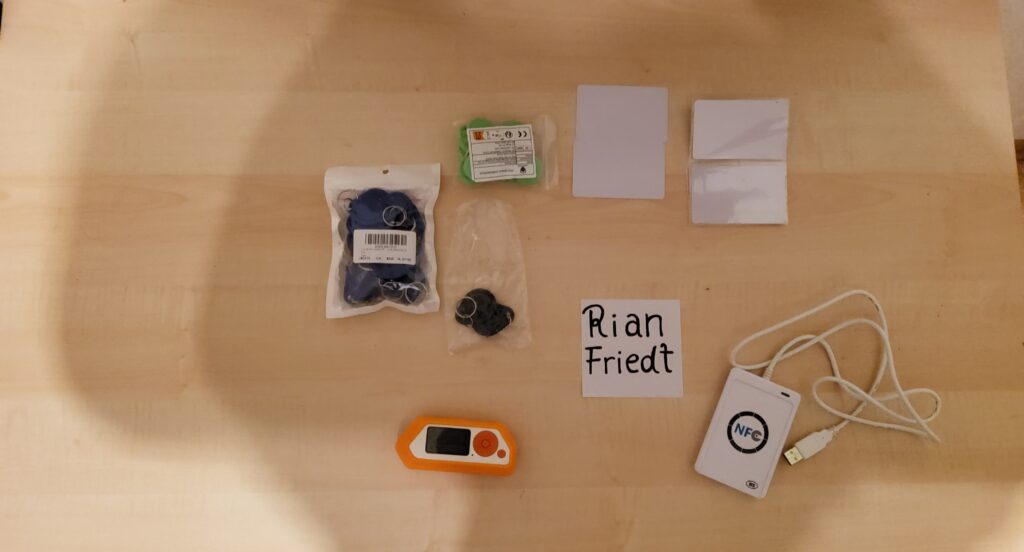
My NFC setup is focused on access-control analysis, card cloning risk, and contactless system hardening.
Tools
- Flipper Zero: Reading and analyzing supported NFC/RFID cards and tags.
- NFC reader: Practical inspection and validation of contactless access systems.
- Writable test cards: Controlled cloning and replay demonstrations in authorized lab environments.
How This Helps
NFC testing can reveal weak authentication, cloneable credentials, poor key management, and insecure card technology. The outcome is practical guidance for stronger access-control processes, better card selection, and improved monitoring.
This work helps organizations reduce the risk of unauthorized physical access through weak or misconfigured NFC systems.
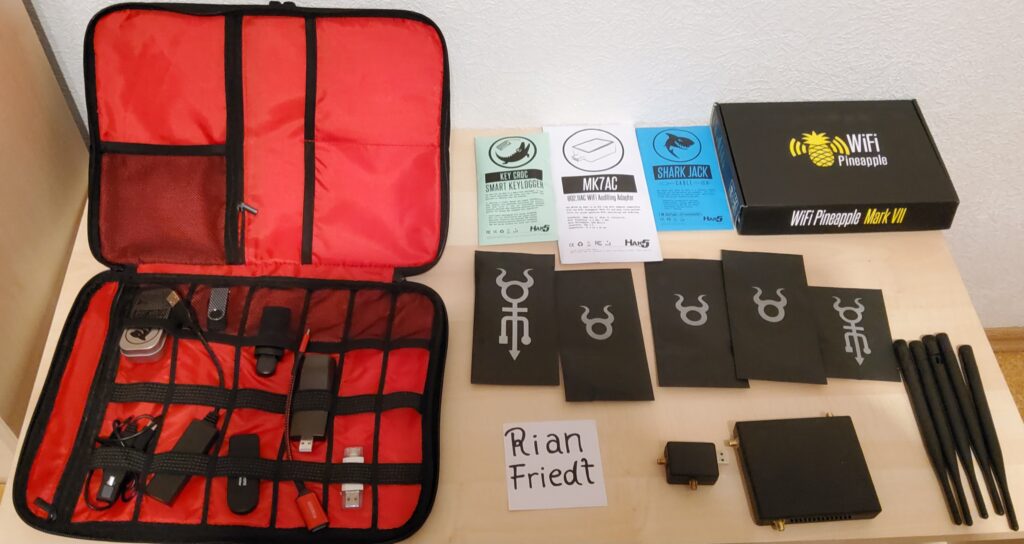
Hak5 Gear Overview
This section covers the Hak5 tools I use for controlled security testing, awareness demonstrations, and lab-based attack simulation.
WiFi Auditing
- WiFi Pineapple Mark VII: Rogue access point testing, Evil Portal workflows, credential-capture demonstrations, and wireless misconfiguration assessment.
- MK7AC adapter: Dual-band support for improved range and reliability during wireless assessments.
USB-Based Attack Simulation
- Bash Bunny: Multi-function USB attack platform for automated payloads, credential-testing scenarios, and endpoint workflow validation.
- USB Rubber Ducky: HID-based keystroke injection for fast, repeatable payload execution in controlled environments.
- OMG Cable and OMG Plug: Covert payload delivery and remote-control testing for awareness and defense validation.
Network Access and Reconnaissance
- Shark Jack: Portable network reconnaissance and payload deployment for internal network testing.
- LAN Turtle: Ethernet-based remote-access testing and network persistence scenarios.
Defensive Awareness
- OMG malicious cable detector: Defensive validation against compromised cable scenarios.
All work is performed in authorized lab or engagement contexts and is used to explain practical risk, detection opportunities, and remediation steps.
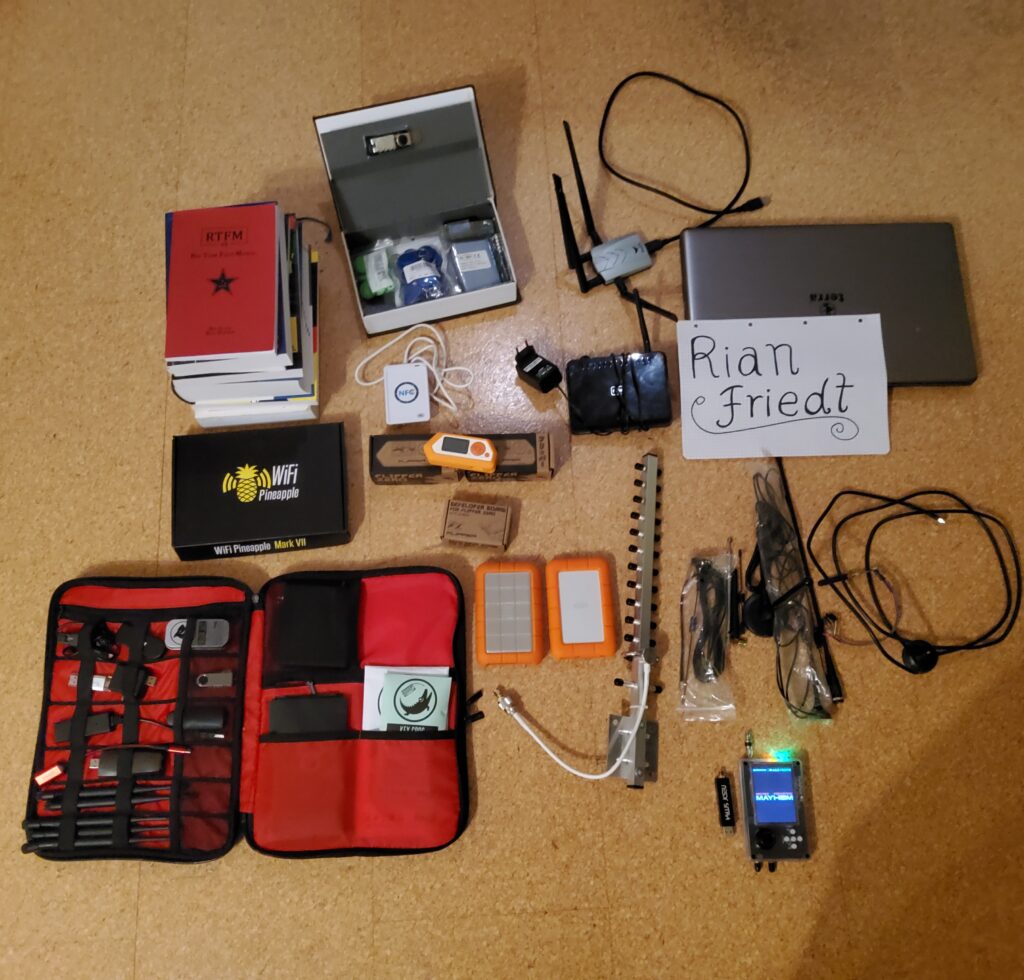
Hacking Gear Overview
My hardware lab is organized into focused categories for wireless, RF, NFC, USB-based attacks, implants, remote access, and practical field testing. The goal is to understand realistic attack surfaces and help organizations identify weaknesses before they become incidents.
Wireless Testing
- WiFi Pineapple Mark VII and MK7AC adapter: Rogue access points, Evil Portals, traffic inspection, and wireless attack simulation.
- Alfa AWUS1900 AC: Packet capture, injection-capable wireless testing, and WPA/WPA2 assessment workflows.
- Flipper Zero with WiFi Dev Board and ESP32-based tools: Portable wireless testing, network scanning, deauthentication testing, and quick lab validation.
- Yagi antenna: Long-range directional testing for controlled wireless assessments.
USB and Hotplug Testing
- Bash Bunny and USB Rubber Ducky: HID-based payload delivery, scripted workflows, and controlled endpoint attack simulation.
- OMG Cable and OMG Plug: Covert USB attack-path testing and awareness demonstrations.
- Key Croc: Keystroke capture and payload execution scenarios in controlled environments.
Network and Remote Access Tools
- Shark Jack and LAN Turtle: Internal network enumeration, payload deployment, and remote-access lab scenarios.
RF and NFC
- Flipper Zero, HackRF One with PortaPack, RTL-SDR, NFC reader, and writable cards: Radio, RFID, and NFC analysis for access-control and wireless-system assessments.
This lab supports practical security testing, training, and demonstrations around real devices instead of purely theoretical attack paths.
WiFi Security Testing Gear
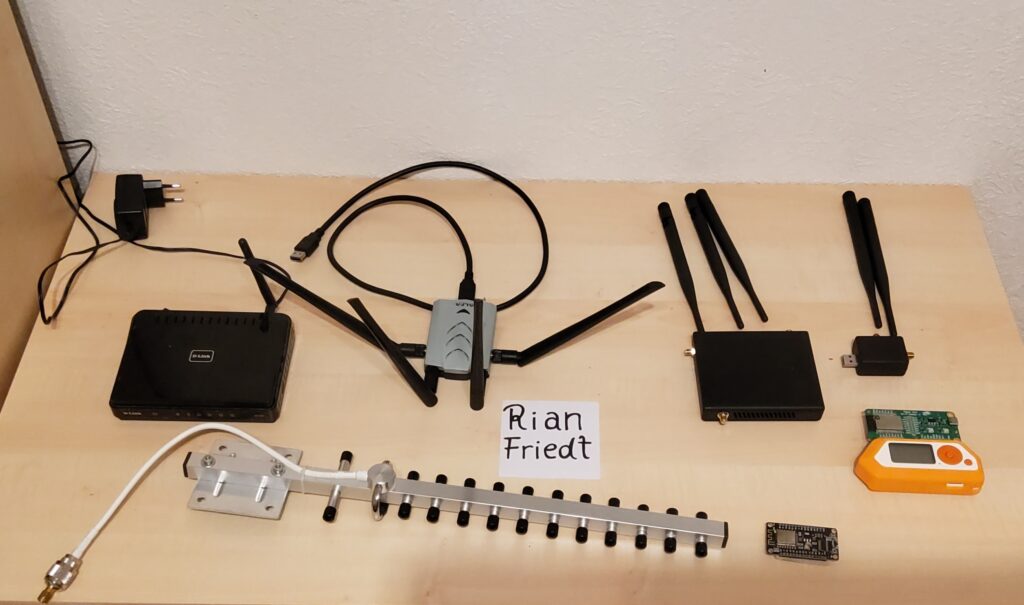
My WiFi testing setup is built for controlled assessments of wireless security, including access point configuration, encryption strength, client behavior, and rogue access point risk.
Tools
- WiFi Pineapple Mark VII: Evil Portal testing, rogue access points, man-in-the-middle workflows, and wireless awareness demonstrations.
- MK7AC adapter: Dual-band 2.4 GHz and 5 GHz support for better testing coverage.
- Alfa AWUS1900 AC: Packet capture, monitor mode, injection-capable testing, and WPA/WPA2 assessment workflows.
- Flipper Zero with WiFi Dev Board: Portable network discovery and wireless testing tasks.
- ESP32 testing boards: Lightweight network scanning, packet injection, and denial-of-service lab scenarios.
- Yagi antenna: Directional long-range testing under controlled conditions.
How This Helps
This toolkit helps identify weak encryption, poor access point configuration, exposed guest networks, rogue access point risk, and insufficient monitoring. The result is practical guidance for hardening wireless environments.
RF Security Testing Gear
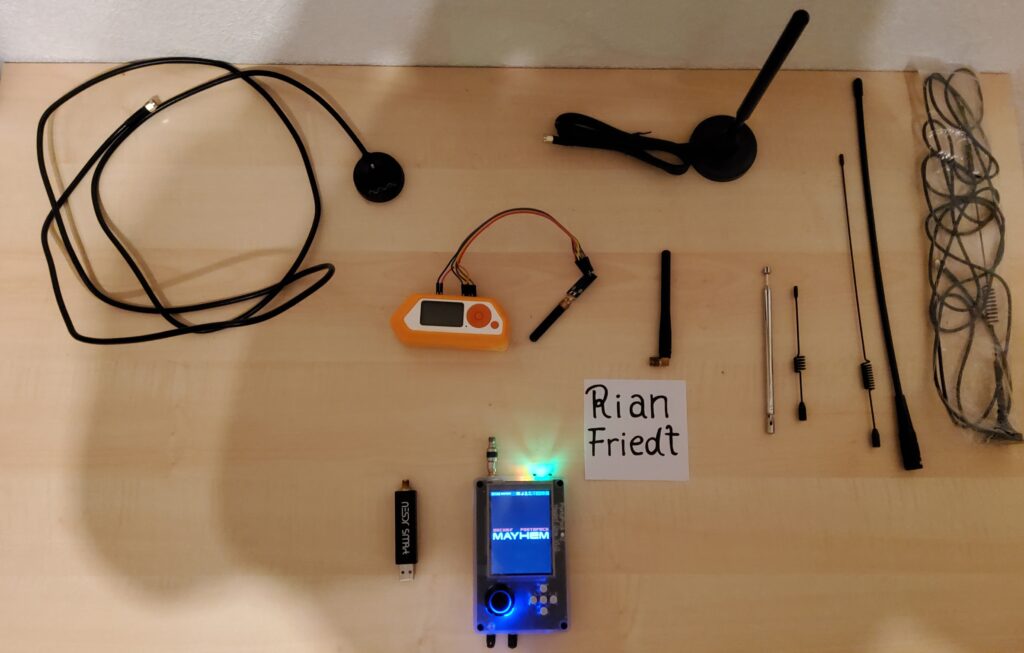
My RF setup is used to analyze wireless systems that operate outside traditional WiFi networks, including remotes, key fobs, IoT devices, and other radio-based systems.
Tools
- Flipper Zero with 433 MHz antenna: RF signal capture, replay testing, and quick field analysis.
- HackRF One with PortaPack H2: Wideband RF analysis, signal inspection, and controlled transmission testing.
- RTL-SDR v5: Software-defined radio receiver for monitoring and analyzing RF signals.
Capabilities
- Capture and analyze RF signals across different protocols.
- Test whether wireless controls rely on weak or replayable signals.
- Help organizations understand RF exposure across physical security, IoT, and industrial environments.
The focus is practical risk identification and clear recommendations for improving wireless resilience.